2026-02-18 19:07:54
Louis Comfort Tiffany
Biography
Louis Comfort Tiffany was born on February 18, 1848, in New York City. He was the son of Charles Lewis Tiffany, the founder of the world-renowned jewelry house Tiffany & Co. Despite the family tradition, Louis chose to pursue an artistic path, studying painting and decorative arts. He studied at the National Academy of Design and in Europe, influenced by Romanticism and 19th-century art.
Artistic Career
Initially, Tiffany worked as a painter, but he soon turned his focus to interior design and the creation of stained glass. In 1879, he founded Tiffany Studios in New York, where he innovated with the Favrile glass technique, creating glass with unique colors and textures that had never existed before.
Awards and Legacy
Tiffany was honored with numerous distinctions, including the Gold Medal at the 1900 Paris Exposition and the title of Chevalier de la Légion d’Honneur from France. His works are exhibited in museums worldwide, such as the Morse Museum in Florida, the Metropolitan Museum of Art in New York, and the Driehaus Museum in Chicago.
Notable Works
-
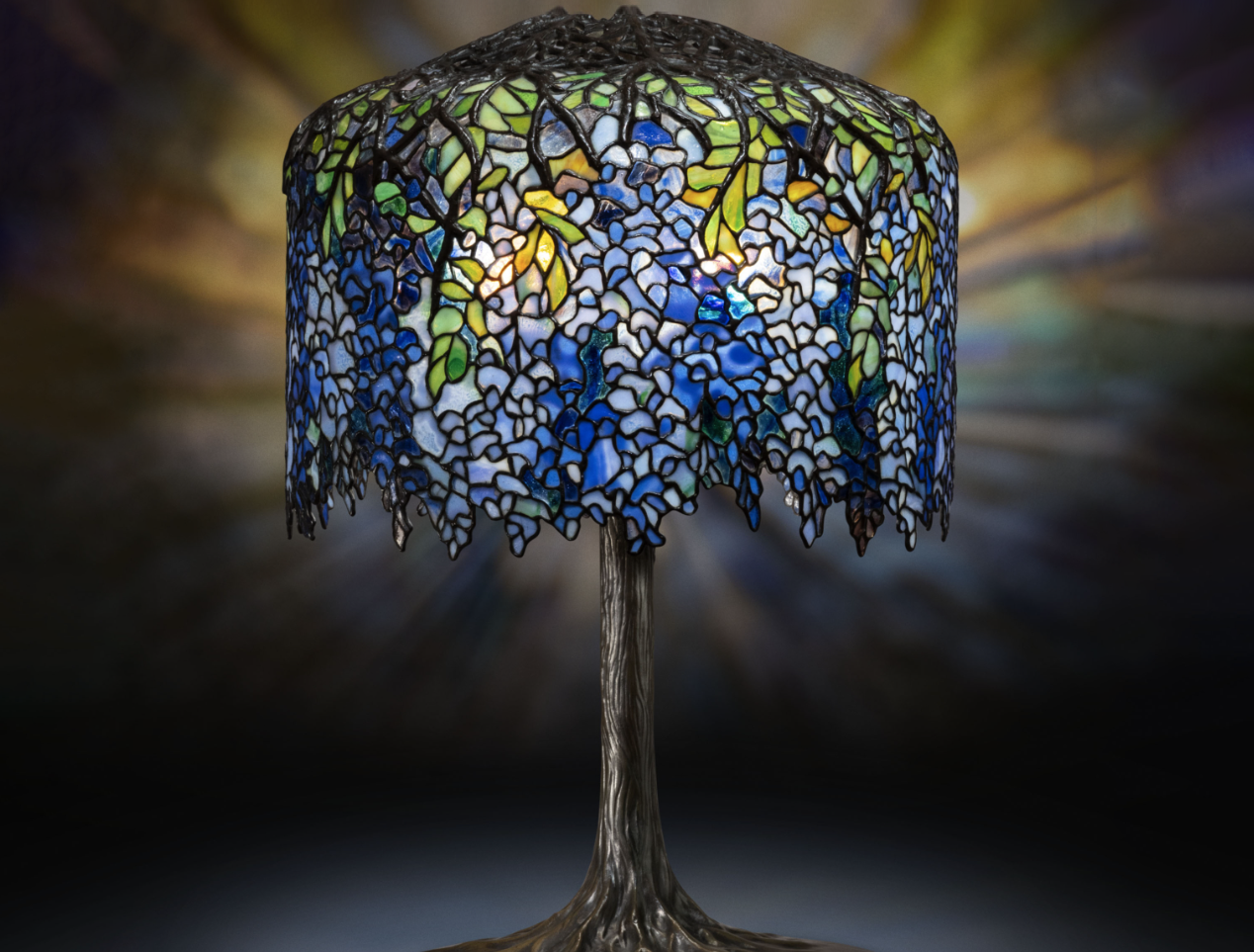
Wisteria Table Lamp (1902): A lamp featuring a wisteria pattern, a signature example of Tiffany’s technique.
-
Magnolias and Irises (1908): A stained glass window depicting blooming flowers, masterfully combining color and light.
-
The Four Seasons (1900): A stained glass window depicting the four seasons, which received an award at the Paris Exposition.
Interesting Facts
-
Tiffany was one of the first to incorporate electricity into his lamps, integrating lighting elements directly into the design.
-
The Favrile glass technique allowed him to create glass with iridescent shades and unique textures.
-
His workshop employed many women, known as the "Tiffany Girls," who contributed significantly to the design and production of his masterpieces.